
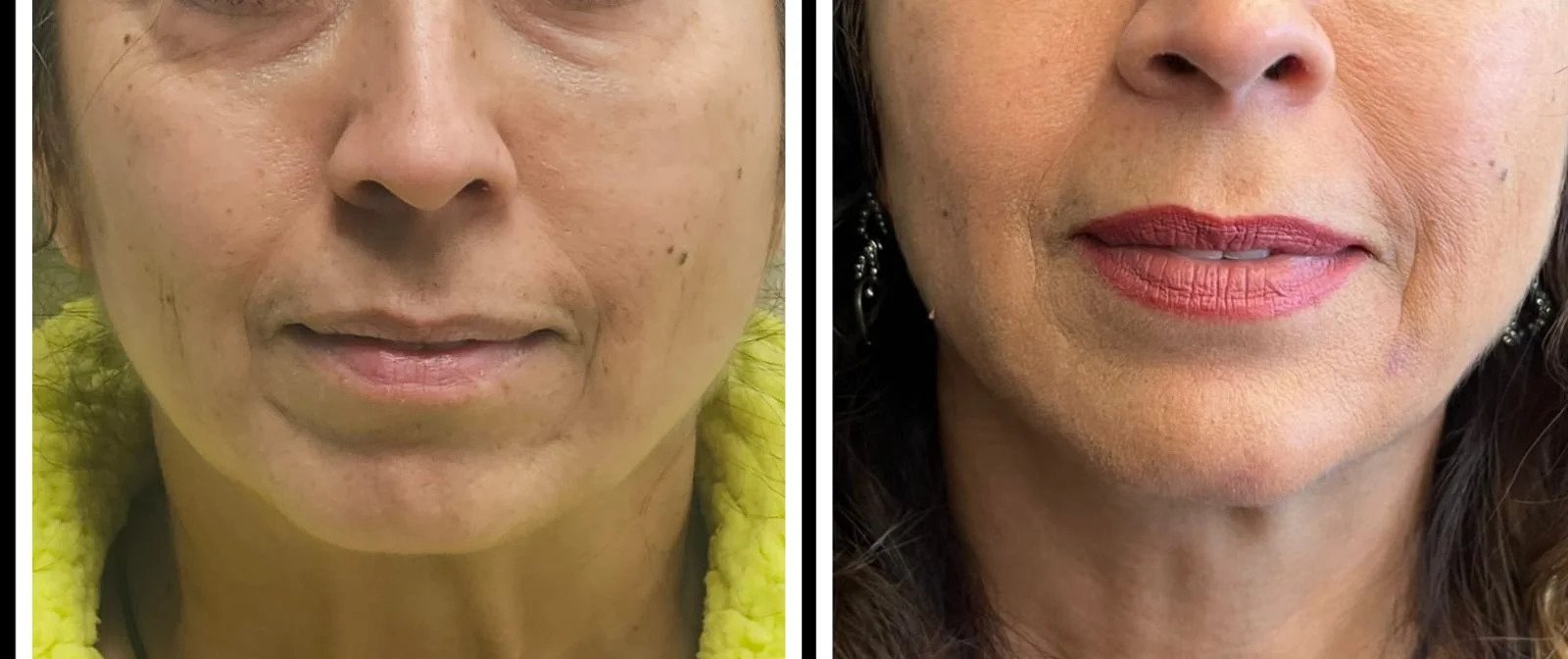
Radiesse and Sculptra are both classified as biostimulators — injectables that prompt your skin to produce its own collagen rather than simply adding volume from outside. But they’re made from different materials, work on different timelines, and suit different concerns. If you’ve been told you’re a candidate for one or both, this guide explains how they compare and what questions to bring to your consultation.
What Is a Biostimulator?
A biostimulator is an injectable treatment designed to activate your body’s own collagen-production response. Unlike hyaluronic acid fillers, which add volume immediately and are eventually absorbed, biostimulators work by triggering a wound-healing response that generates new collagen over weeks and months.
The result builds gradually, tends to look natural, and can last significantly longer than traditional fillers. The trade-off is that you won’t see the final outcome immediately after your appointment.
How Radiesse Works
Radiesse is made from calcium hydroxylapatite (CaHA) microspheres suspended in a gel carrier. When injected, it provides immediate volume while also stimulating collagen synthesis around the microspheres. Over time, the gel carrier absorbs and the microspheres break down, leaving behind your own collagen.
Radiesse is particularly well-suited for:
- Deeper facial folds such as nasolabial folds and marionette lines
- Jawline definition and chin projection
- Hand rejuvenation (restoring volume lost with age)
- Cheek volume restoration
Results typically appear within days due to the immediate volumizing effect, with collagen benefits continuing for several months. Most patients see results lasting 12 to 18 months or longer.
How Sculptra Works
Sculptra is made from poly-L-lactic acid (PLLA), a biodegradable synthetic material that has been used in medical sutures for decades. When injected, it stimulates a slow, gradual collagen response. There is no immediate volumizing effect — the results develop over a series of treatments spanning several months.
Sculptra is well-suited for:
- Diffuse volume loss across the mid-face and temples
- Gradual skin thickening and overall texture improvement
- Patients who want subtle, progressive results with no obvious “done” appearance
- Longer-term collagen maintenance over time
Because Sculptra works gradually, most protocols involve 2 to 3 treatment sessions spaced 4 to 6 weeks apart. Results can last up to 2 years or more in some patients.
Key Differences: Radiesse vs Sculptra
| Feature | Radiesse | Sculptra |
|---|---|---|
| Main ingredient | Calcium hydroxylapatite (CaHA) | Poly-L-lactic acid (PLLA) |
| Immediate volume | Yes | No |
| Result timeline | Immediate + gradual | Gradual over months |
| Sessions typically needed | 1 (occasionally 2) | 2–3 sessions |
| Duration | 12–18 months | Up to 2+ years |
| Best areas | Folds, jawline, hands, cheeks | Mid-face, temples, diffuse loss |
| Reversible? | No | No |
Can Radiesse and Sculptra Be Combined?
In some cases, a provider may recommend using both treatments in the same patient, addressing different concerns in different areas. For example, Radiesse might be used for immediate jawline definition while Sculptra is used for diffuse temple volume loss. This is not a standard protocol and depends entirely on individual anatomy and goals — not something to plan without professional assessment.
Which One Should You Choose?
The right choice depends on what you’re trying to address, your timeline expectations, and whether you want some immediate visible change or are comfortable waiting for gradual results.
Radiesse may be the better fit if: You have a specific area of concern — a deep fold, a defined jawline goal — and would like to see some change right away while collagen builds over time.
Sculptra may be the better fit if: You’re looking for slow, natural-looking improvement across multiple areas with results that develop so gradually that no one knows you’ve had anything done.
Neither product is appropriate for everyone. Patients with active skin infections, certain autoimmune conditions, or a history of keloid scarring require individual assessment. A thorough consultation is the only way to determine candidacy.
What to Expect at MJ Aesthetics
At MJ Aesthetics in North York, biostimulator consultations begin with an assessment of facial volume loss, skin quality, and your specific goals. Mehran Javidan, IMG, reviews your anatomy and medical history before recommending a treatment approach. All aesthetic procedures at MJ Aesthetics are performed under appropriate physician delegation in accordance with Ontario’s Regulated Health Professions Act.
If you’re considering Radiesse or Sculptra in North York, a consultation is the starting point — not a commitment to either product.
Frequently Asked Questions
Is Radiesse painful?
Radiesse is typically mixed with lidocaine to minimize discomfort during injection. Some patients experience brief pressure or stinging at the injection site. The process takes 20–45 minutes depending on the number of areas treated.
How long does Sculptra take to work?
Sculptra results develop gradually over 3 to 6 months following the treatment series. Most patients do not see significant change until 6 to 8 weeks after their first session, with the full outcome visible after completing the recommended number of sessions.
Can either treatment be reversed?
Neither Radiesse nor Sculptra can be dissolved the way hyaluronic acid fillers can (with hyaluronidase). This is an important consideration before treatment — the results, including any irregularities, will persist until the product naturally breaks down.
Are biostimulators safe for all skin types?
Both products have been used across a range of skin tones and types. However, individuals with a tendency toward nodule formation or significant hyperpigmentation following any skin trauma should discuss this specifically during their consultation.
Ready to find out which option suits your goals? Book a consultation at MJ Aesthetics in North York to discuss your options with Mehran Javidan, IMG.