
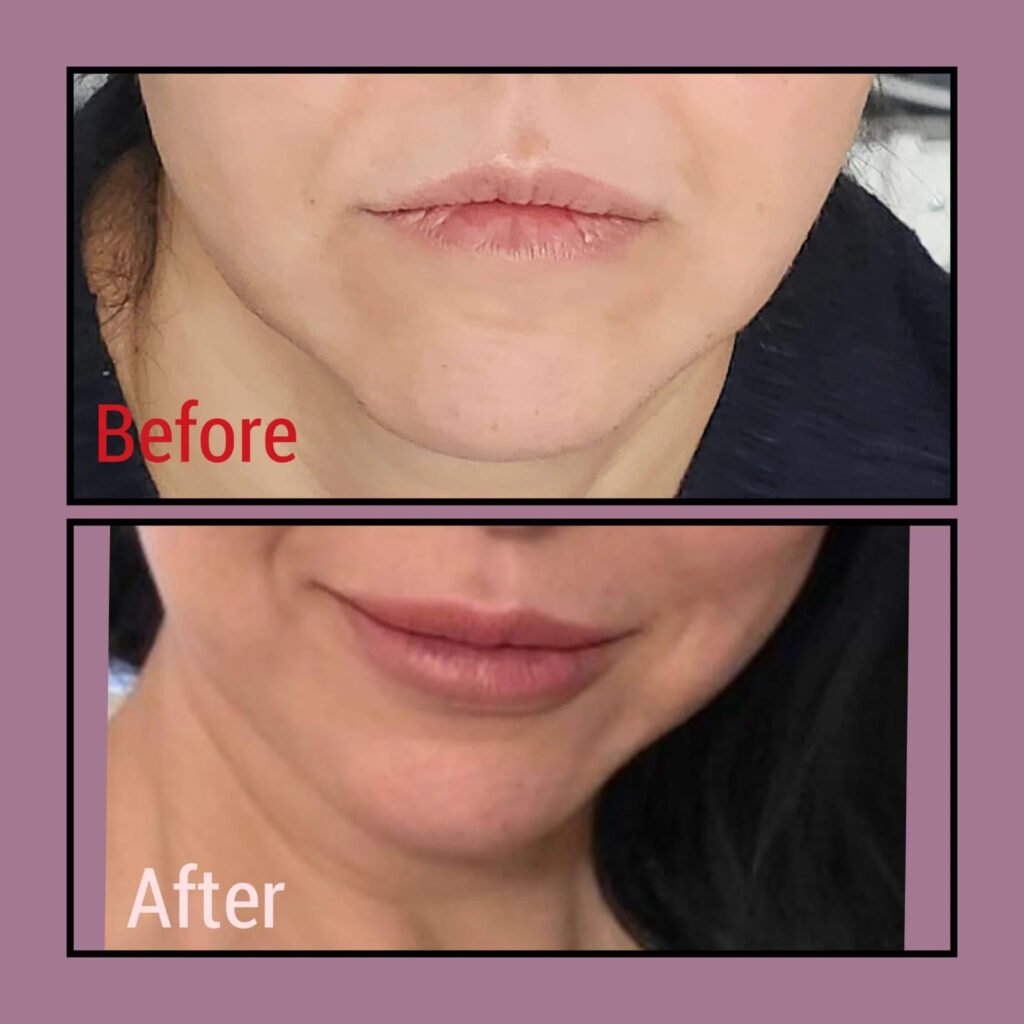
The most common question first-time filler patients ask isn’t “does it work” — it’s “where should I even start?” Lips, cheeks, jawline, under-eyes, temples: they’re all technically the same category of treatment, hyaluronic acid filler, but they solve completely different problems and suit completely different faces. Here’s how to think about it
Start with what’s actually bothering you — not what’s trending
Filler trends move fast on social media, but the right starting area has almost nothing to do with what’s popular and everything to do with what you’re actually noticing in the mirror. A useful way to sort it:
- If you feel like your face looks “tired” even when you’re well-rested — that’s usually volume loss in the cheeks or under-eyes, not fine lines. Cheek filler restores the mid-face support that naturally declines with age, which often softens under-eye shadows too without touching that area directly.
- If your jawline feels soft or undefined — jawline filler adds structure and a cleaner profile, and it’s one of the more popular starting points for people in their late 20s through 40s who want definition without looking “done.”
- If you’re self-conscious about thin lips or asymmetry — lip filler is the most targeted, visible option, and results are usually judged the fastest since the change is right where everyone looks first.
- If you have persistent dark circles or hollowing under the eyes — tear trough (under-eye) filler is more technical and benefits from an experienced injector, since this is one of the areas where subtlety really matters.
- If you’re noticing hollowing at your temples — this is a less commonly discussed area, but temple volume loss actually affects the whole upper face’s shape, and restoring it can have a bigger visual impact than people expect for a relatively small treatment.
Why price varies so much between areas
At MJ Aesthetics, filler pricing starts from $400 per syringe for cheeks, jawline, and chin, and from $450 per syringe for lips, under-eyes, temples, and nose — the exact price depends on the brand of filler used and how many syringes your goals require. Areas that need more precise, technical placement (like under-eyes) or that typically use premium products aren’t necessarily “better,” they’re just built differently for a different job.
Can you combine areas?
Yes, and a lot of people do once they’ve had one treatment and know how their face responds. A common, natural-looking combination is cheek and jawline together, since restoring structure in both areas tends to create a more balanced result than doing either alone. That said, we’d never recommend stacking multiple areas on a first visit before you know how your face reads with filler at all — starting with one area and reassessing is the more honest approach, even if it means a second appointment.
How long does filler actually last?
This varies by area more than people expect. Lips tend to metabolize filler faster because of how much the mouth moves throughout the day — expect to think about touch-ups around the 6–9 month mark. Cheeks and jawline, which move far less, often hold their shape for 12–18 months. This is worth factoring into your decision: if you’re not ready for a treatment that “commits” you to touch-ups relatively often, lips may not be the right first area even if they’re what you notice most in the mirror.
What if you’re not sure at all?
That’s genuinely the most common starting point, and it’s exactly what a consultation is for. Rather than guessing from a price list, a proper assessment looks at your actual bone structure, skin quality, and facial proportions to figure out where filler would create the most natural, balanced improvement — not just where you assumed you needed it.
Quick answers
What’s the safest first filler area for a beginner? Cheek or jawline filler is often recommended as a starting point, since results build gradually and subtly rather than being immediately obvious the way lip filler can be.
Does filler look obviously “done”? Not when it’s dosed conservatively and placed to restore natural volume rather than exaggerate it — which is really a placement and amount question, not a property of filler itself.
Can filler be dissolved if I don’t like it? Yes, hyaluronic acid filler can be dissolved with an enzyme called hyaluronidase if the result isn’t what you wanted.
Building toward the right decision
If facial volume loss is more the concern than fine lines and wrinkles, it’s also worth reading about biostimulators like Radiesse, which take a different, longer-term approach to restoring structure rather than filling a specific spot. And if you’re weighing filler against Botox for a line that bothers you, our earlier piece on Botox vs. dermal fillers breaks down which one actually addresses which kind of concern.
Not sure which area is right for your face specifically? Book a free consultation with Mehran Javidan, IMG, at MJ Aesthetics in North York — we’ll talk through your goals before recommending anything.