
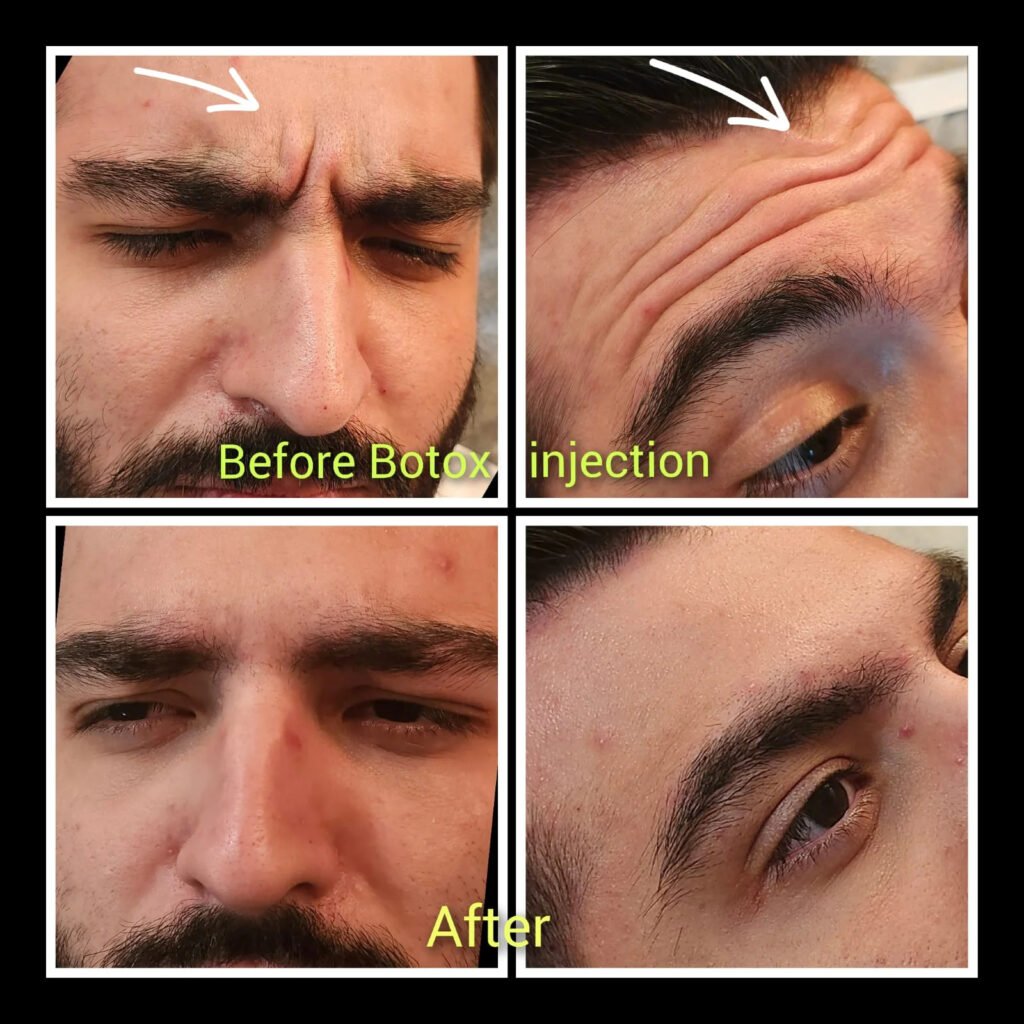
If you’ve searched “how long does Botox last,” you’ve probably already seen a dozen different answers. Here’s the honest one: for most people, Botox lasts three to four months. Some people stretch closer to five or six months with repeat treatment. Some people, especially first-timers, see it fade closer to the two-and-a-half to three-month mark. There’s no single number that’s right for everyone, but there is a real, predictable pattern — and that’s what this guide walks through.
The short answer
Botox typically lasts 3 to 4 months. Full results appear within 3 to 5 days and settle completely by around 2 weeks — which is why most injectors, including here at MJ Aesthetics in North York, ask you to hold off judging your results until that two-week mark. The exact duration after that depends on where it’s injected, how much was used, and how your own body processes it.
Why the timeline isn’t the same for everyone
Botox works by temporarily blocking the nerve signal that tells a muscle to contract. Less muscle movement means fewer dynamic wrinkles — the lines that show up when you frown, squint, or raise your eyebrows. Your body gradually metabolizes the product over time, the nerve signal returns, and the muscle starts moving normally again. That metabolism speed is where individual variation comes in.
A few things that genuinely affect how long your results hold:
- Which area was treated. Smaller, more active muscles — like the ones around the eyes for crow’s feet — tend to wear off faster than larger, less mobile areas. Forehead and crow’s feet commonly land in the 3–4 month range; frown lines between the brows can run 3–5 months; jaw-slimming (masseter) treatment often lasts longer, sometimes 4–6 months, simply because that muscle is stronger and the dosing is typically higher.
- How much was used. Higher unit counts in an area generally last longer than a light, “barely-there” dose — though a heavier dose can also look less natural if it’s not placed carefully.
- First treatment vs. repeat treatment. It’s genuinely common for a first Botox treatment to wear off a little faster than expected, and for results to last progressively longer with each subsequent visit. Muscles that are trained to relax regularly tend to need less to maintain the same effect over time.
- Your metabolism and activity level. Higher metabolic rate, frequent intense exercise, and high stress can all mean your body processes the product a bit faster.
When should you book your next appointment?
Most people start noticing small movements returning around the three-month mark — a little life creeping back into the forehead when you raise your eyebrows, for example. That’s the right window to book a touch-up, not after it’s fully worn off. Letting the muscle fully regain its strength before your next treatment doesn’t damage anything, but it does mean you’re essentially starting from zero again rather than maintaining momentum.
One thing worth knowing: Botox wearing off doesn’t make wrinkles worse than they were before. Your muscles simply return to their normal baseline. If anything, consistent treatment over time tends to soften how quickly dynamic lines re-form, since the muscle spends less time contracting overall.
Does Botox and Dysport last the same amount of time?
In day-to-day clinical use, the difference in duration between Botox and other botulinum toxin products is minor when each is dosed appropriately for the area. If you’re weighing the two, our earlier guide on Botox vs. dermal fillers covers how to think about which treatment actually fits what you’re trying to address — since the two aren’t interchangeable, even though people often ask about them together.
Quick answers
How long does Botox last the first time? Usually a little shorter than later treatments — often 2.5 to 3.5 months rather than the full 3–4 month average.
Does exercise make Botox wear off faster? Frequent intense exercise can modestly speed up how quickly your body metabolizes the product, though it’s a minor factor compared to area treated and dose.
Can I make Botox last longer? Staying on a consistent treatment schedule (rather than waiting until it’s fully worn off each time) is the most reliable way people extend how long their results feel like they last.
Getting a timeline that’s actually yours
Every number above is a population average — useful for knowing what to expect, but not a substitute for someone actually looking at your face, your muscle strength, and what you’re hoping to achieve. At MJ Aesthetics, Mehran Javidan, IMG, brings close to 20 years of hands-on aesthetic experience to that assessment, working under physician delegation to build a treatment plan around your specific goals rather than a one-size-fits-all dose.
If you’re also weighing volume loss alongside fine lines, it’s worth a look at our dermal fillers page too — Botox and filler solve different problems, and a lot of people end up wanting both.
Ready to find out what your own timeline looks like? Book a consultation with MJ Aesthetics in North York, and we’ll walk through it together.