
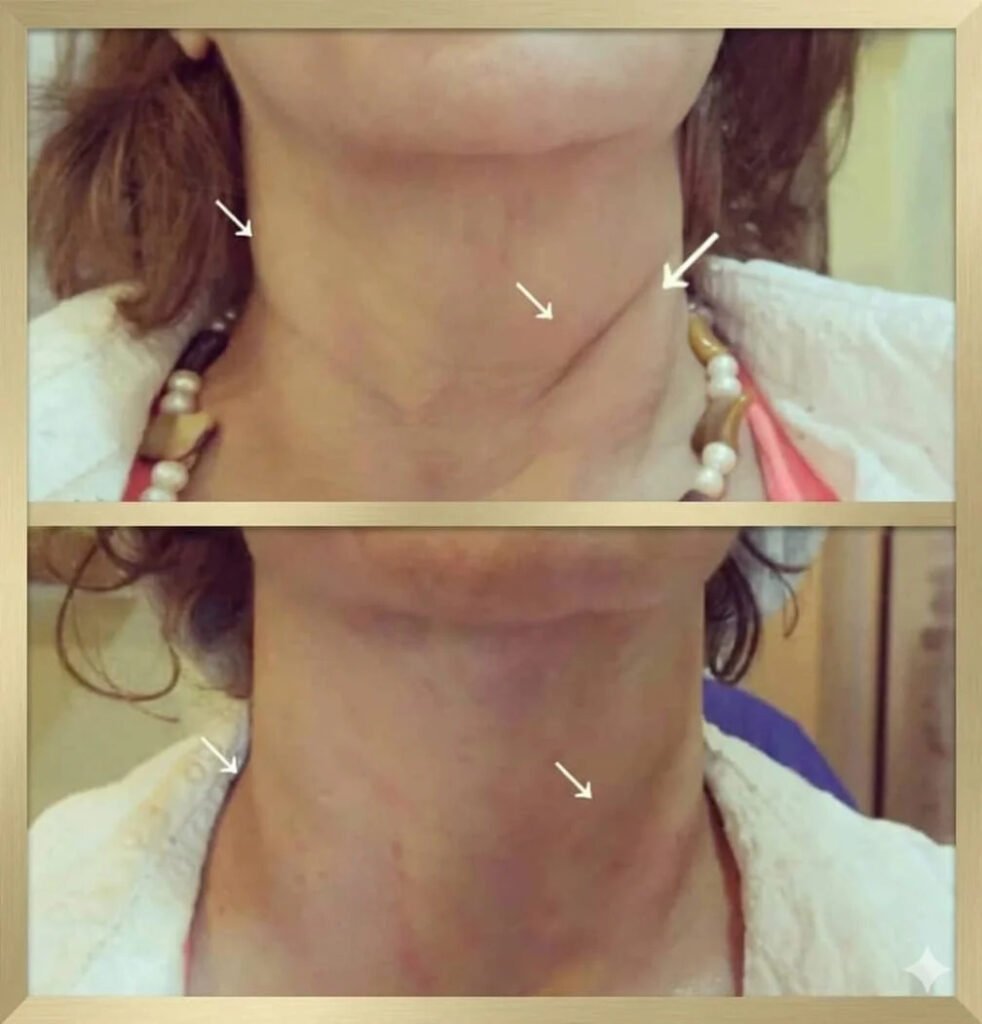
“Thread lift” gets talked about as one treatment, but it’s really a category — and the type of thread used changes what it actually does to your face. If you’ve been researching thread lift and keep running into terms like “mono,” “cog,” or “screw” without a clear explanation, here’s what they actually mean.
The material first: what “PDO” means
PDO stands for polydioxanone, a biodegradable suture material that’s been used safely in surgery for decades before being adapted for aesthetic thread lifting. Because it’s absorbable, PDO threads dissolve naturally in the body over several months — the lifting or stimulating effect isn’t from the thread staying in place forever, it’s from what the thread triggers while it’s there and after it dissolves.
Mono threads — the “refresh” thread
Mono threads are smooth, single filaments with no barbs or texture. They don’t provide meaningful mechanical lift on their own — instead, inserting them stimulates collagen production in the surrounding tissue, gradually improving skin quality, firmness, and texture over the following weeks and months. Mono threads are often used for finer lines, early skin laxity, or as a lighter-touch option for someone who wants a subtle refresh rather than visible lifting.
Cog threads — the “lift” thread
Cog threads have small barbs along their length that grip the surrounding tissue, allowing the practitioner to create actual mechanical lift and repositioning — pulling sagging tissue in a specific direction and holding it there while the thread is in place. This is the type most people picture when they hear “thread lift,” since it’s the one that produces a visible, immediate lifting effect in areas like the jawline, cheeks, and jowls, in addition to the same longer-term collagen stimulation as mono threads.
Screw threads — the “volume” thread
Screw threads are twisted around a central filament, and their design is more about adding volume and improving tissue density in a specific area than lifting or refreshing. They’re often used in areas that have lost volume rather than sagged, working somewhat similarly in concept to how biostimulators add structural support, but through a thread rather than an injectable.
So which type do you actually need?
This depends entirely on what your face is showing:
- Sagging or drooping (jawline, jowls, mid-face) → cog threads, for actual mechanical lift
- Fine lines, early laxity, dull texture → mono threads, for a collagen-focused refresh
- Localized volume loss without much sagging → screw threads, or a conversation about whether filler might actually be the more direct tool for that specific concern
Most real treatment plans use a combination rather than a single thread type — cog threads to lift the areas that need repositioning, and mono threads layered in to support overall skin quality across the treated zone. This is part of why thread lift pricing at MJ Aesthetics starts from $1,200 for the face and $1,900 for face and neck, based on consultation and in-person assessment — the actual thread count and combination is genuinely individual, not a fixed package.
How is this different from a surgical facelift?
Thread lift is not a replacement for surgery in cases of significant, advanced sagging — it’s a minimally invasive option best suited to mild-to-moderate laxity. We’ve covered this distinction, and how to know which category you fall into, in our earlier post: Thread Lift: Is a Non-Surgical Facelift Right for You?
Quick answers
How long do PDO threads last? The thread itself dissolves over roughly 4 to 6 months, but the collagen stimulation it triggers continues supporting the treated area well beyond that.
Does a thread lift hurt? Most patients describe pressure and mild discomfort during placement rather than significant pain, and downtime is typically limited to some swelling or bruising over the following days.
Can thread lift be combined with Botox or filler? Yes — many treatment plans layer thread lift with injectables, since they address structure, volume, and muscle movement through three genuinely different mechanisms.
Getting the right combination for your face
Choosing between mono, cog, and screw threads — and in what combination — isn’t something to guess at from a blog post. At MJ Aesthetics in North York, Mehran Javidan, IMG, assesses your specific pattern of sagging, volume loss, and skin quality in person before recommending a thread plan.
If your concern is fullness under the chin rather than sagging, our page on double chin treatment with Belkyra explains another option.
Book a free consultation to find out which thread type actually fits what your face needs.