
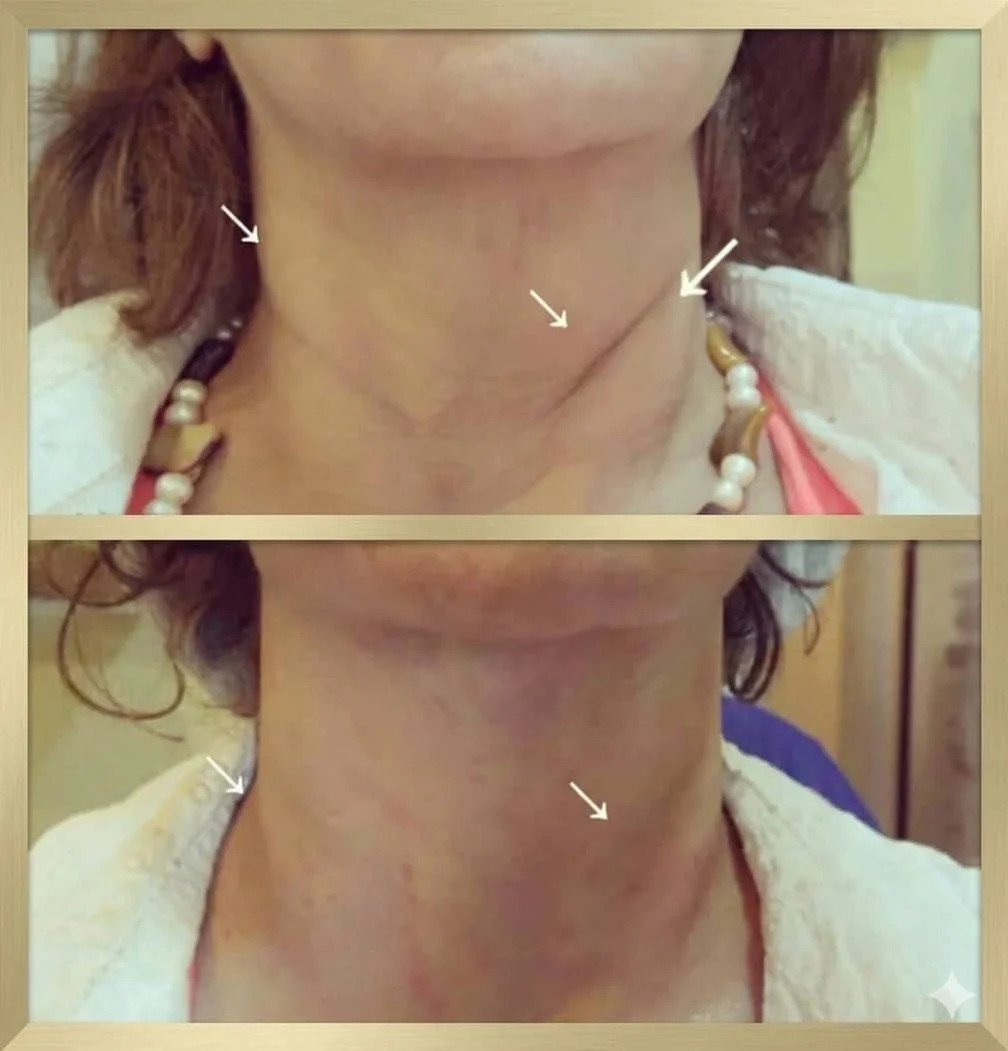
A PDO thread lift is a non-surgical procedure that uses dissolvable sutures to lift and reposition skin tissue while also stimulating collagen production. The threads dissolve over time, but the structural and collagen effects they produce can persist longer than the threads themselves.
It’s one of the more misunderstood treatments in medical aesthetics — often described as a “non-surgical facelift,” which is accurate in some respects but creates expectations that don’t always match the reality of what threads can deliver.
What PDO Threads Are
PDO stands for polydioxanone, a synthetic absorbable polymer that has been used in surgical sutures for decades. When used in aesthetic treatments, PDO threads are inserted under the skin using a fine needle or cannula. Depending on the type, they can:
- Lift and reposition tissue (barbed or cog threads with directional anchors)
- Tighten skin (smooth mono threads that stimulate collagen without lifting)
- Improve skin texture and thickness (fine mesh threads used for overall skin quality)
The threads dissolve over approximately 6 months. The collagen response they trigger — a foreign body reaction that encourages fibroblast activity and new collagen synthesis — continues after the threads have gone.
What a PDO Thread Lift Can and Cannot Do
Thread lifts work best for mild to moderate skin laxity. They are not a replacement for surgical facelift in patients with significant ptosis (drooping), excess skin, or substantial volume loss. Understanding what threads can realistically achieve is the most important part of any consultation.
| Thread lifts can address | Thread lifts cannot adequately address |
|---|---|
| Mild jowling and jawline softening | Significant skin excess or heavy jowls |
| Brow and mid-face lifting (mild) | Deep nasolabial folds requiring volume |
| Neck and lower face tightening | Severe neck laxity with loose banding |
| Overall skin quality improvement | Major structural aging requiring surgery |
The Procedure
The treatment area is numbed with local anaesthetic before threads are inserted. Depending on the number of threads placed and the areas treated, the procedure takes 45 minutes to 1.5 hours. Most patients experience some pulling sensation during placement despite the anaesthetic.
After the threads are positioned, you may be asked to avoid certain movements for a short period while the tissue settles. The area is gently massaged to smooth the skin along the thread path.
Recovery and Downtime
Thread lifts involve more downtime than most injectable treatments. Typical recovery involves:
- Days 1–3: Swelling, tenderness, and possible bruising at insertion points; dimpling or puckering of the skin at entry sites is normal and temporary
- Days 3–7: Swelling reduces; puckering resolves in most cases; mild tightness and some asymmetry as tissue settles
- Weeks 2–4: Most visible recovery complete; result becomes clearer
- Months 1–3: Collagen response building; final result visible around 3 months
Patients are typically advised to avoid strenuous exercise for 1 week, sleep on their back for 1–2 weeks, and avoid extreme facial movements or massage for at least 2 weeks.
How Long Do PDO Thread Lift Results Last?
This is the most common question about thread lifts — and the one most subject to overpromising in the industry. A realistic answer:
- The immediate mechanical lift from barbed threads: 12–18 months in most patients
- The collagen stimulation benefit (skin quality and mild tightening): can persist 18–24 months
- The overall visible improvement: most patients see meaningful change for 1–2 years before considering repeat treatment
Results depend on the number and type of threads used, the area treated, skin quality, age, and how well the individual responds to the collagen stimulus. Younger patients with good skin elasticity and mild laxity tend to see the longest-lasting results.
Who Is a Candidate for PDO Threads?
Ideal candidates are generally adults between 35 and 60 with early to moderate skin laxity who want visible improvement without surgery. Patients who have already had a surgical facelift may also benefit from threads to extend or enhance their result over time.
Thread lifts are not appropriate for patients with active skin infections, certain clotting disorders, or unrealistic expectations about the degree of lift achievable non-surgically.
Related reading: PDO Thread Lift Types Explained: What’s Actually Different Between Them | Thread Lift — Is a Non-Surgical Facelift Right for You?
All procedures at MJ Aesthetics in North York are performed under appropriate physician delegation in accordance with Ontario’s Regulated Health Professions Act. Book a consultation to discuss whether PDO threads are the right option for your concerns.
Frequently Asked Questions
Are PDO thread lifts painful?
The area is numbed with local anaesthetic before the procedure. Most patients describe a feeling of pressure or pulling during insertion rather than sharp pain. Post-treatment soreness is common for several days.
Can threads be combined with other treatments?
Yes. Thread lifts are often combined with dermal fillers or biostimulators for a more comprehensive result — threads lift and tighten while fillers address volume loss. Combining treatments is discussed and planned during the consultation.
What happens if I’m unhappy with the result?
Unlike hyaluronic acid fillers, PDO threads cannot be dissolved. However, most complications — puckering, asymmetry, thread visibility — resolve as swelling subsides and tissue settles. Persistent issues are assessed on a case-by-case basis. This is why choosing an experienced provider matters significantly with thread procedures.