
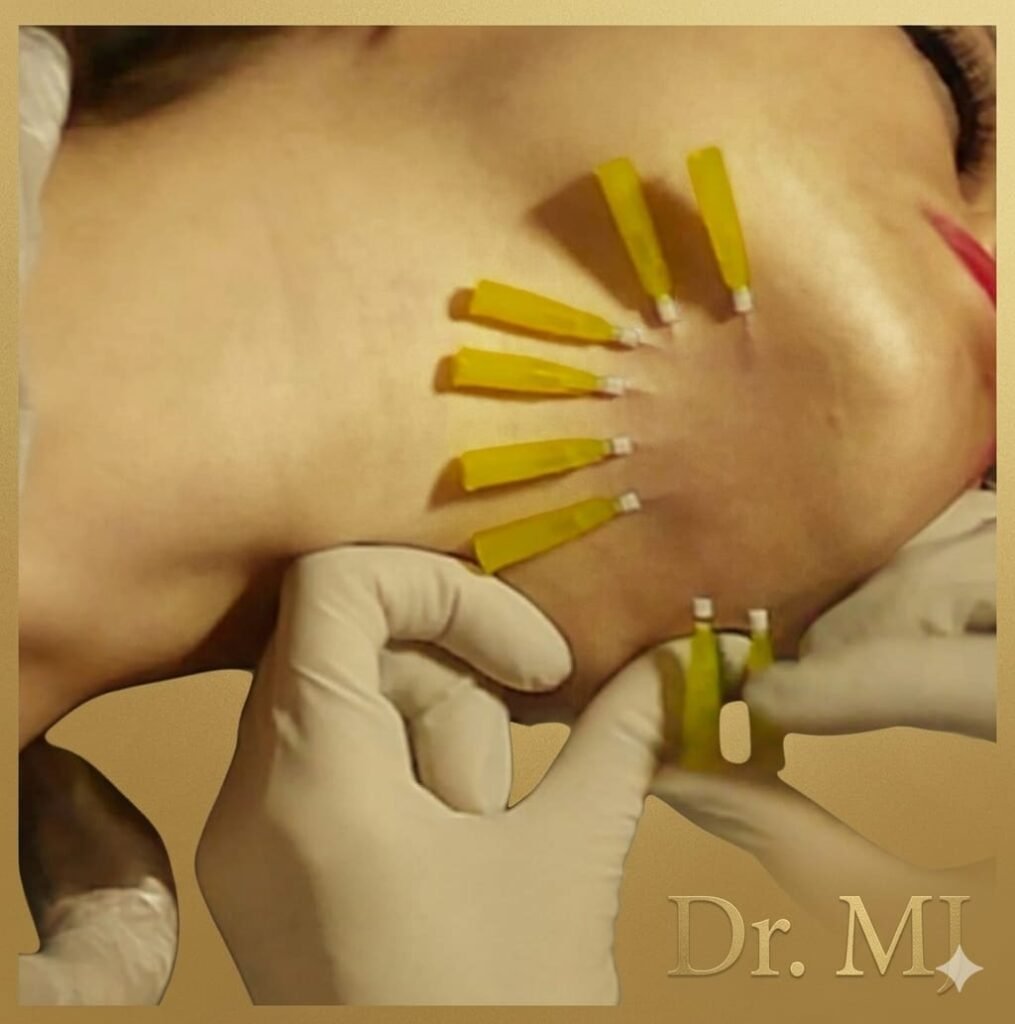
Somewhere between “getting Botox and filler” and “having an actual facelift,” there’s a category of treatment a lot of people don’t fully understand yet: thread lifts. If you’re at the point where injectables aren’t quite addressing what you’re seeing, but surgery feels like a bigger step than you’re ready for, this is worth understanding properly before you rule it in or out.
What a Thread Lift Actually Is
A thread lift uses specially designed absorbable threads, placed beneath the skin with a fine cannula, to provide mechanical support and a subtle lifting effect in selected areas — typically the cheeks, jawline, and areas affected by mild to moderate sagging. The threads themselves are usually made from PDO (polydioxanone), the same type of absorbable material that’s been used in surgical sutures for decades elsewhere in medicine.
Depending on the thread type and technique used, treatment can also stimulate collagen formation around the treated areas — so there’s both an immediate mechanical effect and a slower-building regenerative one, somewhat similar in spirit to how biostimulators work, just through a different mechanism.
Where It Fits on the Spectrum
This is the most useful way to think about thread lift: it sits between dermal fillers (non-surgical, but the effect is limited to where volume is added and typically lasts months) and a surgical facelift (permanent-feeling results, but real surgery, real recovery, real cost). A thread lift won’t replace what surgery does for significant skin laxity, but it also doesn’t come with the recovery timeline or cost of surgery.
What About Downtime?
There’s no true “downtime” in the sense of being out of commission — most people are back to normal activities the same day or the next. That said, expect some mild bruising and swelling for a few days, and it’s generally advised to avoid strenuous exercise for a couple of weeks while things settle. This is a real, if minor, recovery period — not a “walk in on lunch, walk out with no trace” procedure, despite how it’s sometimes marketed.
How Long Does It Actually Last?
Results commonly last somewhere in the range of one to one and a half years, depending on the treated area and the individual. It’s genuinely temporary — the threads themselves dissolve over time — which is part of the appeal for people who want to try a lifting effect without a permanent commitment, but it also means this isn’t a “set it and forget it forever” treatment.
What Are the Real Risks?
Being upfront about this matters: possible side effects include bruising, swelling, and — less commonly — issues like thread migration (where a thread becomes visible or shifts) or skin dimpling at the entry points. These are uncommon with correct technique and placement, but they’re real possibilities worth understanding before you book, not something to discover afterward. This is exactly why individualized assessment and technique matter more here than almost any other non-surgical treatment on our menu.
Is It Right for You?
Thread lift tends to make the most sense for people noticing early-to-moderate sagging — along the jawline, in the cheeks, around marionette lines — who aren’t good candidates for (or aren’t ready for) surgery, but who’ve found that Botox and filler alone aren’t fully addressing what they’re seeing. It’s not a fit for significant skin laxity, and it’s not a substitute for a facelift in more advanced cases. A consultation is really the only reliable way to know which category you fall into.
Full details on treatment areas and pricing are on our Thread Lift page.
If you’re earlier in the aging-change spectrum, dermal fillers or biostimulators like Radiesse might be a better starting point — see Dermal Fillers and Biostimulators & Radiesse.
Book a consultation to find out if thread lift is the right fit for your face, or call 437-556-1119.
Mehran Javidan is an International Medical Graduate (IMG) who is not currently registered as a physician with the College of Physicians and Surgeons of Ontario. He provides aesthetic treatments at MJ Aesthetics under physician delegation, in accordance with Ontario’s Regulated Health Professions Act.